Russian grammar for beginners tenth lesson
Learn Russian grammar with P.S.Russian
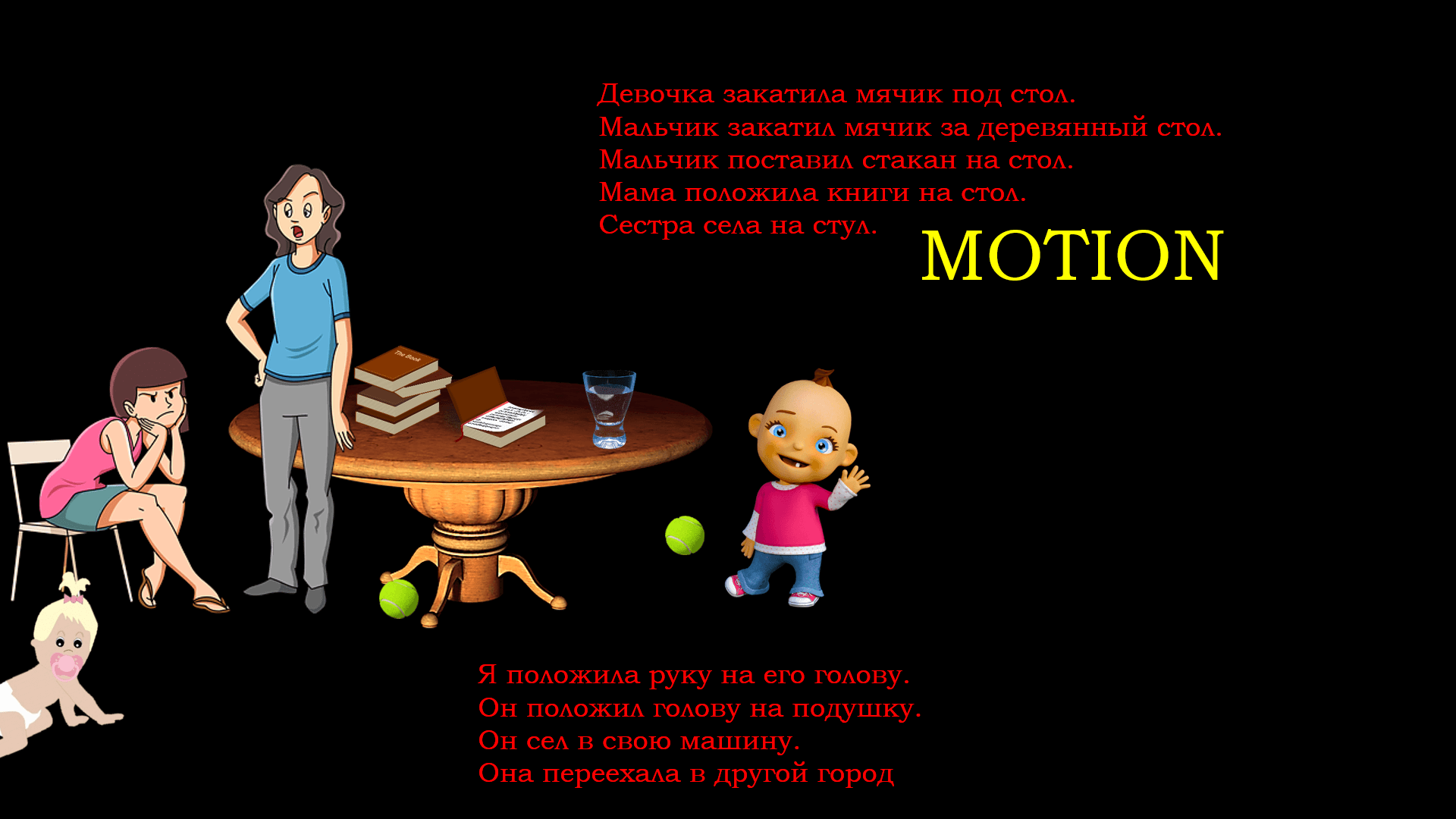
Direction of motion in Russian language
Russian grammar for beginners – 10th lesson. In this lesson you will learn one of the function of the accusative case to denote direction of motion. We will talk about Russian grammatical genders and their endings. Also you will learn how to build your own sentences including direction of motion, Russian prepositions в , на, под, за and direct objects.
Russian grammar for beginners – accusative case
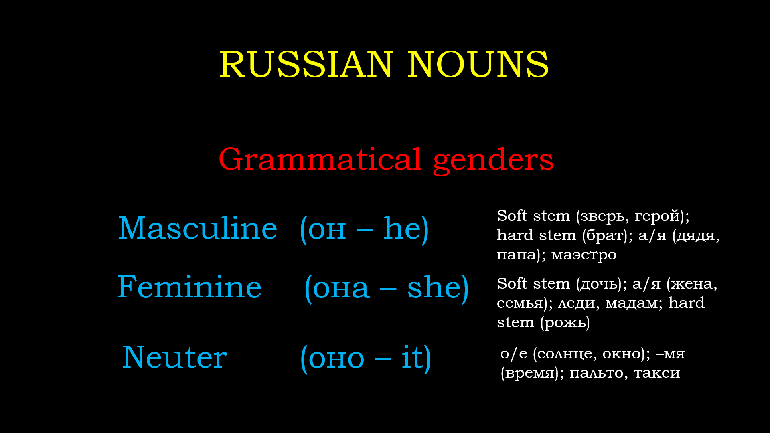
Russian grammatical genders
Masculine
Feminine
Neuter
Russian motion verb ехать
Ехать
– to go (by transport), to drive, to travel
Present tense of Russian verb ехать
еду
едешь
едет
едем
едете
едут
Past tense of Russian verb ехать
ехал
, ехала,
ехало
ехал
ехал
,
Она
ехала, Оно
ехало
ехали
ехали
ехали
Future tense of Russian verb
ехать
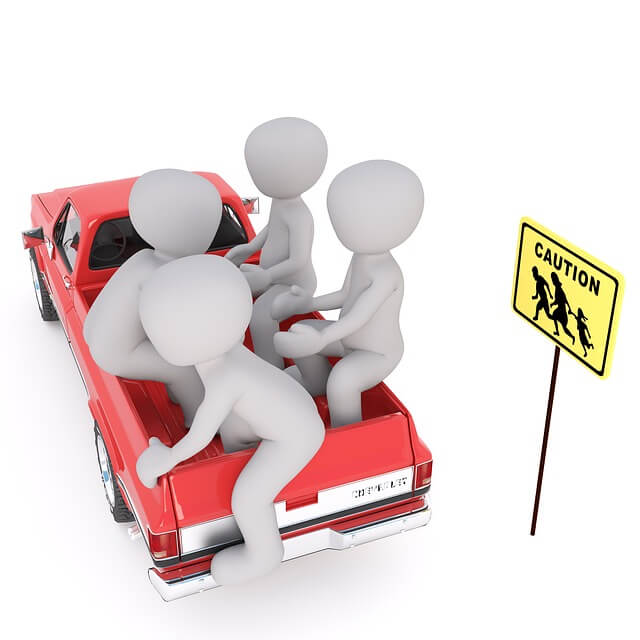
ехать
(поеду)
ехать
(поедешь)
ехать
(поедет)
ехать
(поедем)
ехать
(поедете)
ехать
(поедут)
Russian motion verb ехать with Russian prefixes
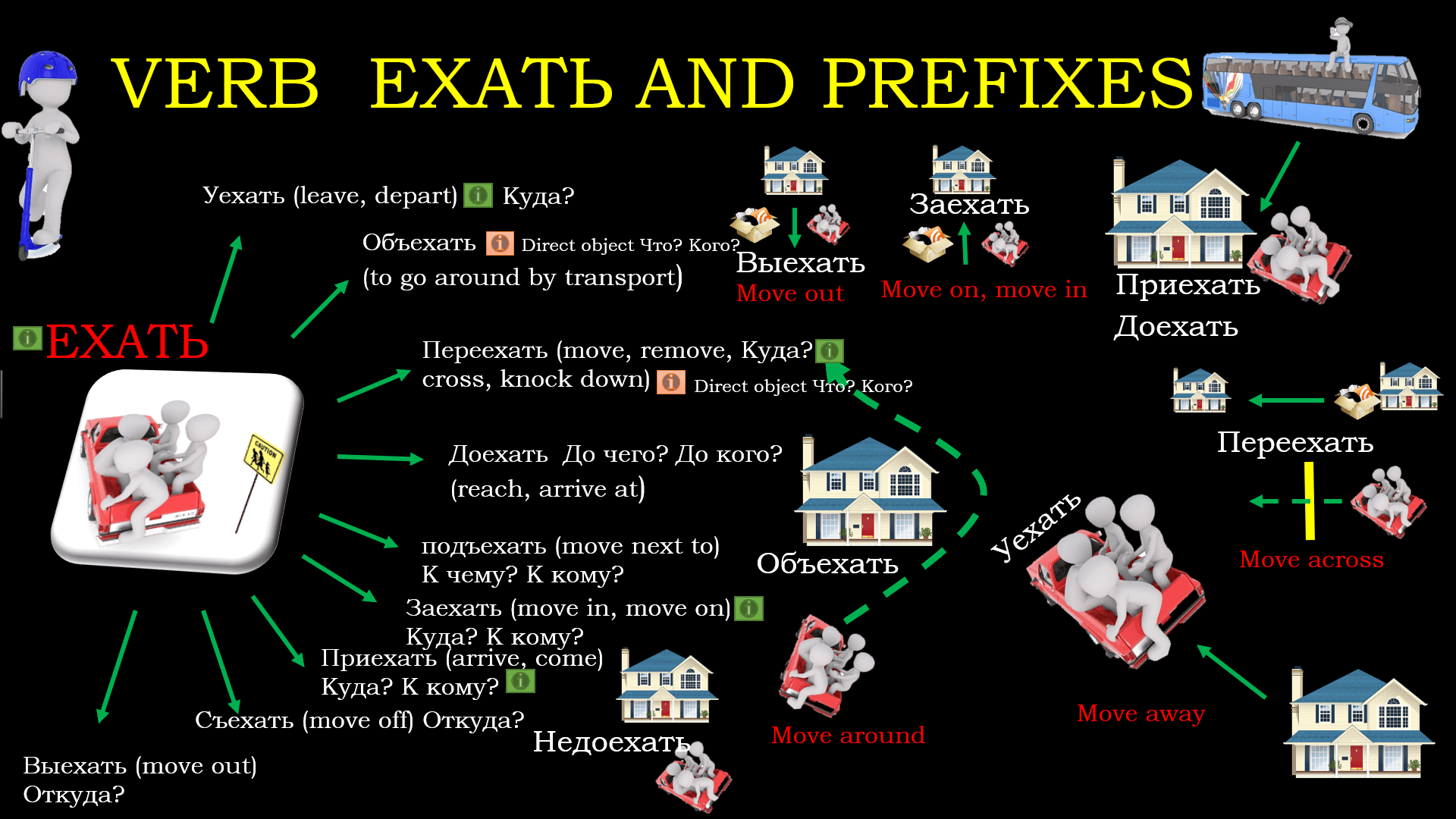
Уехать, объехать, переехать, доехать, подъехать, заехать, приехать, съехать, выехать
Russian sentences – direction of motion
Девочка
(feminine, nominative, singular)
закатила
(second person singular, present tense)
мячик
(masculine, accusative case)
под стол
(masculine, accusative case, singular).
In a dictionary you will find these forms –
Девочка,
закатить,
мячик, под,
стол.
Мальчик
(masculine, nominative, singular)
>закатил
мячик за
деревянный
(masculine, accusative, singular)
стол
(masculine, accusative, singular).
Мальчик
поставил
стакан на
стол.
Мальчик,
поставить,
стакан, на,
стол.
мама
положила
книги
на стол.
мама
, положить,
книга
, на, стол.
Сестра
села на
стул.
Сестра,
сесть, на,
стул.
руку
на
его
голову.
рука
, на,
его
(
он
), голова.
Он
положил
голову на
подушку.
Он
, положить,
голова, на,
подушка.
Он
сел
в
свою
машину
.
Он
, сесть,
в
,
своя
(
свой
),
машина
.
Она
переехала
в
другой
город.
Она
,
переехать,
в
, другой,
город.
еду
в
школу на
собрание.
ехать
,
в
, школа, на,
собрание.
работу
.
работа
.
папа
идёт
на
работу
.
папа
,
идти
, на
работа
.
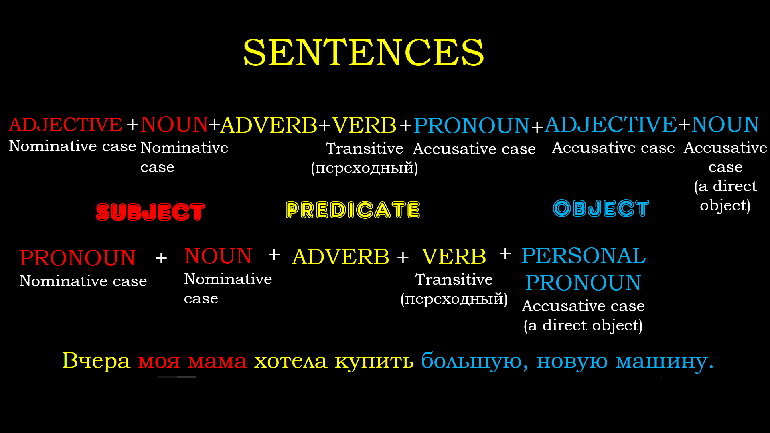
How to build your own sentences in Russian
мама
(feminine, nominative case, singular)
хотела
(second person singular
купить
книгу
(feminine, accusative, singular).
мама
,
хотеть
, пойти,
купить
,
книга
.
To understand how all these words are linked together you can
split them into small groups. When you will
build your own sentences, you will do this the other way round
– arranging few words in one group and then join these
groups together.
Start with your subject –
Мама
. You can describe your subject including possessive pronouns,
adjectives or both.
Мама
чья? –
мама
. However, you can say more.
Мама
какая? –
любимая. You even
can describe your adjective, including adverb –
горячо
любимая, or use one
more adjective – (самая)
красивая
.
красивая
мама
. Obviously you wouldn’t use these in your dialogue, but
you need to practice to put words together and use correct
form using these examples. The same you can do to the rest of
the sentence.
Книга
(Какая? –
Мама
хотела.
Мама
хотела
сделать
купить
.
Мама
хотела
пойти
(куда? –
Мама
хотела
купить
(
книгу
).
Мама
хотела
пойти
купить
(
мама
.
Vocabulary for beginners
Russian verbs and nouns
Идти
– walk, go
Магазин
– shop
Школа
– school
Банк
– bank
Работа
– work
Детский
сад
– nursery
Больница
– hospital
Собрание
– meeting
Ехать
– go by transport
Лететь
– fly
Поставить – put (upright)
Налить – pour
Стакан – glass
Закатить – roll (behind, under)
Девочка – girl
Мальчик – boy
Мячик – small ball
Стол – table, desk
Деревянный – wood
Бежать – run